
The Best Appliance Brands for Los Angeles Kitchens (2026 Guide)
Repairly Team · · 8 min read · Updated
In this article
- What to look for in a brand
- What repair technicians see from the truck
- Dependable mainstream brands
- Premium and luxury options
- How long should each appliance last?
- Gas, electric, or induction: the serviceability angle
- Matching the brand to your kitchen and budget
- How repairable a brand is over its lifetime
- When to call a pro
Buying new kitchen appliances in Los Angeles is a big decision, and finding the best appliance brands for your home comes down to more than looks. You want something that runs reliably, holds up in daily use, and can actually be fixed when something goes wrong years down the road. We repair appliances for a living — 2,500+ completed repairs across LA — so this guide comes from the side of the industry that sees what breaks, what lasts, and what’s a headache to fix. Here’s how to choose, framed for LA homeowners who cook a lot and expect their equipment to last.
What to look for in a brand
Before you fall in love with a finish or a feature list, weigh the things that matter over the long haul. A great brand is one that keeps working and is easy to service.
- Reliability: Look for models with a strong track record and read recent owner reviews, not just marketing copy. A brand can be excellent in one category (say, refrigerators) and only average in another (like ranges).
- Parts availability: Ask whether common parts are stocked locally or have to be special ordered. Widely sold brands usually mean faster, cheaper repairs.
- Service network: Some brands are easy for independent technicians to work on; others funnel you toward a limited dealer network. Broad serviceability is a real advantage.
Treat these three factors as your foundation. A flashy feature is nice, but it won’t help you when a fridge stops cooling during an LA heat wave.
What repair technicians see from the truck
Here’s a perspective most buying guides can’t offer: what brands look like from the repair side. A few honest patterns from years of LA service calls.
Simple machines age best. The appliances that reach fifteen years are usually the mechanically simple ones — fewer boards, fewer sensors, fewer things to fail. Every touchscreen and WiFi module is another component with a shorter lifespan than the machine around it.
Parts supply is destiny. When a widely sold brand fails, the part is often on the truck and the repair finishes the same visit. When a niche import fails, you can wait weeks for a component to cross an ocean. Two identical failures, two very different experiences — decided the day you bought the machine.
Feature forward brands trade lifespan for features. The brands pushing the most electronics per cubic foot tend to generate more control board and sensor calls than their mechanically simpler competitors. That’s not a reason to avoid them — the features may be worth it to you — but it’s a real trade, and nobody at the showroom will mention it.
Every brand breaks. We’ve repaired all of them. The difference between a good brand and a frustrating one isn’t whether it fails — it’s how gracefully it fails, and how cheap and fast the fix is.
Dependable mainstream brands
Most Los Angeles kitchens are served well by mainstream, mid priced brands. These makers produce refrigerators, wall ovens, cooktops, ranges, and dryers that balance price, features, and repairability without the premium markup.
- Whirlpool built its reputation on predictable wear and one of the widest parts networks in the business — a big part of why its appliances tend to age gracefully and repair well.
- GE benefits from a deep domestic parts supply; common components like igniters, bake elements, and thermistors are widely stocked, so most GE repairs finish quickly.
- KitchenAid and Maytag (both in the Whirlpool family) share that parts advantage, with KitchenAid skewing more premium and Maytag more workhorse.
- Bosch brings tighter European build quality to wall ovens and cooktops — quiet, precise, and well engineered, with somewhat pricier parts than the domestic brands.
- Samsung and LG lead on features and design, and their self diagnostic error codes genuinely help a technician find the fault fast. They also carry more electronics per machine than any other mainstream maker — see the trade above.
- Frigidaire remains a value pick: basic, honest machines that are inexpensive to buy and inexpensive to fix.
The common advantage across all of these is practicality. Parts are common, technicians know the machines inside and out, and you’re rarely waiting weeks for a component. Judge the specific model, though — every one of these brands has standouts and duds, so check recent owner reviews for the exact unit, not the badge.
Premium and luxury options
If you’re renovating or want a showpiece kitchen, premium and luxury brands offer heavier build quality, more powerful ranges and cooktops, and a high end look. Many LA homes with serious home cooks lean this direction — and in neighborhoods full of built in, panel ready kitchens, the luxury tier is often the default.
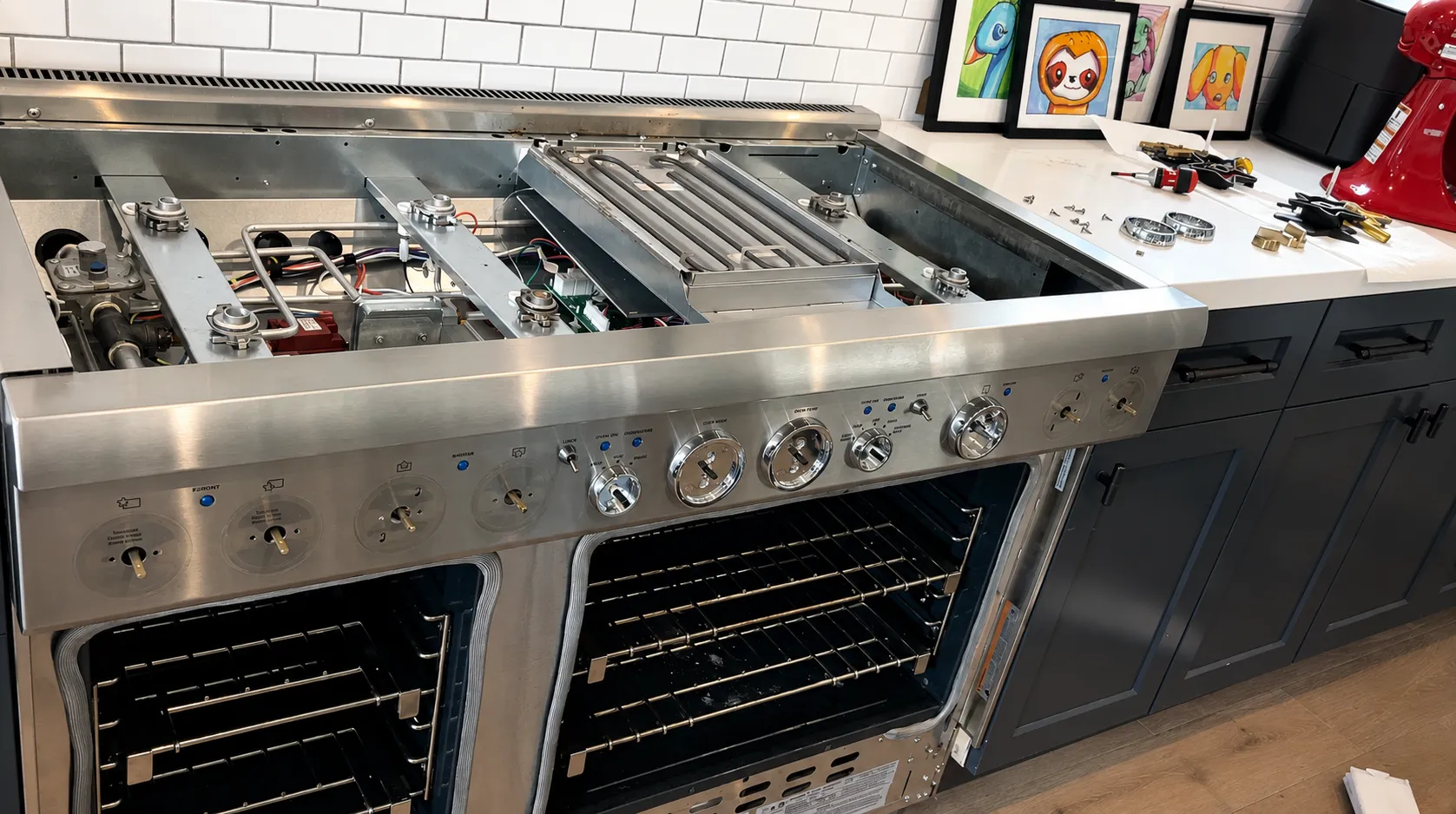
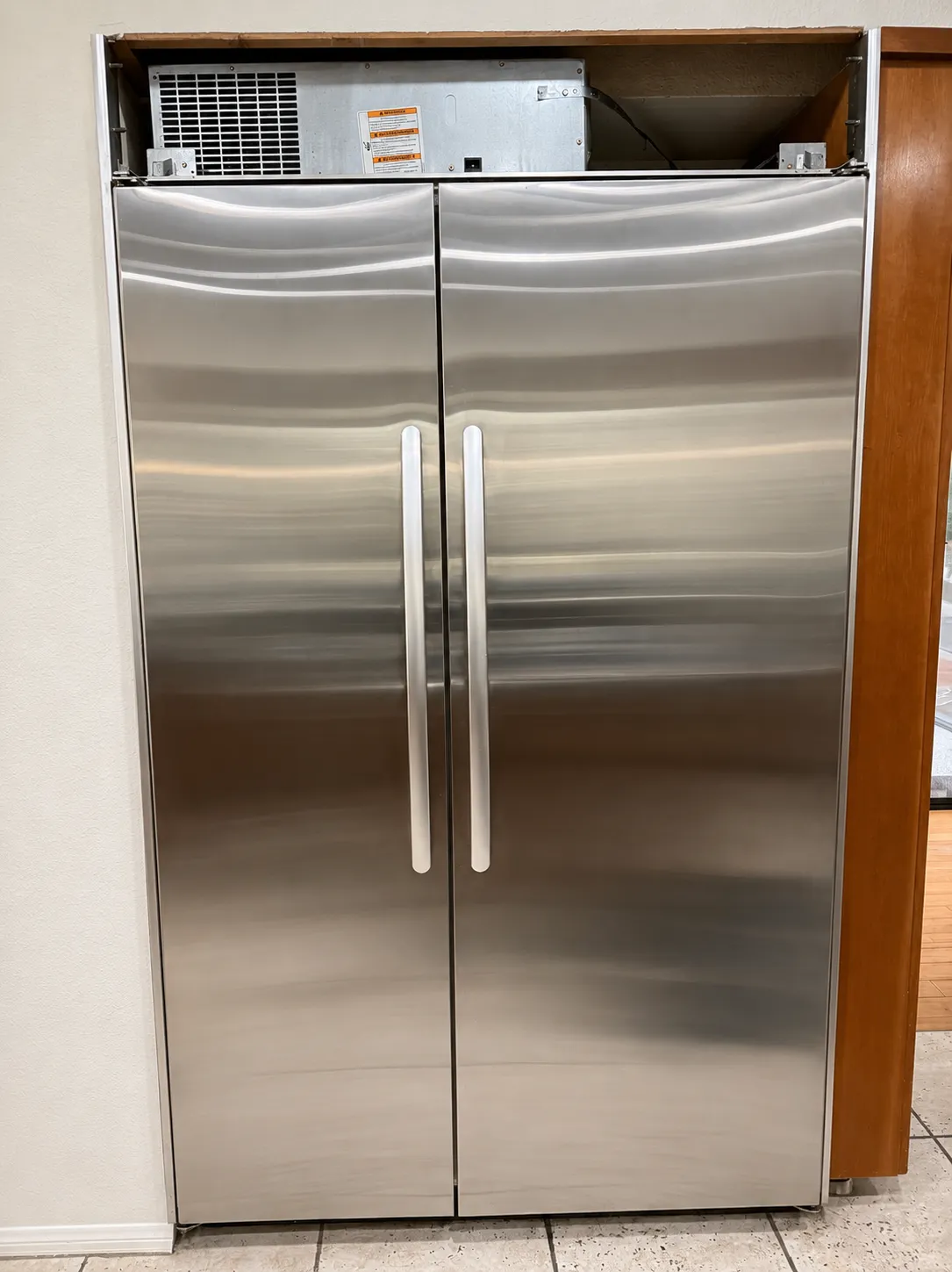
Just go in with clear eyes. Luxury appliances can cost more to repair, and some rely on specialized parts or a narrower service network — one reason luxury appliance repair is a specialty in its own right. The flip side: a built in luxury refrigerator is almost always worth repairing rather than replacing, because replacement means matching cabinetry and a far larger bill. Weigh the cooking performance and design you’re paying for against long term upkeep. A premium range with pro style burners can be worth it if you cook constantly, but it’s overkill if you mostly reheat leftovers.
How long should each appliance last?
Rough working lifespans we see in the field, assuming normal use and basic maintenance:
- Refrigerators: roughly 10–20 years depending on brand and type; compressors are typically rated for about 10–15 years, and built ins tend to outlast freestanding units.
- Dryers: about 10–15 years — often longer, since they’re mechanically simple. Keeping the vent path clear is most of the battle.
- Gas ranges: around 14 years or more; gas cooktops are simple enough to run for decades.
- Wall ovens: commonly 10–15 years, with self clean heat being the thing that shortens control board life.
- Induction and glass top electric cooktops: closer to 10–12 years; the power electronics are the priciest components in the category.
A unit in the middle of its expected life with a modest fault is almost always worth fixing. One at the end of it with a major failure usually isn’t — and an honest technician will tell you which case you’re in before any money changes hands.
Gas, electric, or induction: the serviceability angle
Fuel type quietly shapes your ownership costs, and it’s worth factoring in alongside cooking preference.
Gas is the serviceability champion. Burners, valves, and igniters are simple, cheap parts with fast labor, which is why a gas cooktop can outlive everything else in the kitchen.
Electric radiant sits in the middle: elements and switches are straightforward, but a cracked glass top is one large part that can’t be patched.
Induction cooks brilliantly and costs the most to keep alive — the power boards and coils are the most expensive electronics in any cooktop. If you go induction (and there are great reasons to), go in knowing the repair math is different.
Matching the brand to your kitchen and budget
The best brand for your neighbor may be the wrong one for you. Start with how you actually live and cook.
- Set a real budget. Include not just purchase price but likely maintenance and energy use — ENERGY STAR ratings make operating costs easy to compare.
- Match features to habits. A large capacity dryer or a high BTU cooktop only earns its price if you’ll use it.
- Mind your space and hookups. Confirm dimensions and whether you have gas or electric before you shop, especially for wall ovens and ranges. Plenty of older LA homes carry 1950s era wiring that a modern double wall oven will test.
- Think about who’ll fix it. Before buying anything unusual, search whether independent techs in LA service it — or whether you’re marrying the manufacturer’s service line.
The goal is a kitchen that fits your life, not the fanciest badge you can afford.
How repairable a brand is over its lifetime
Appliances aren’t disposable, and repairability should factor into your decision from day one. When you’re comparing models, ask a few forward looking questions.
- Are replacement parts widely available, or discontinued quickly?
- Can independent technicians service it, or only the manufacturer?
- Do owners report the same component failing early and often?
Using genuine OEM parts during any repair helps a brand’s appliances reach their full lifespan — it’s why we stock common OEM parts on every truck — so it’s worth asking about part quality whenever you get service. A brand that stays fixable is a brand that saves you money for a decade or more.
When to call a pro
Some maintenance is DIY friendly: cleaning fridge coils, clearing a dryer’s lint path, wiping down burners. For anything beyond the basics, bring in a professional. Always unplug an appliance before inspecting it. And if you ever smell gas near a range or cooktop, don’t touch switches or anything that could spark. Ventilate the area, leave, and call your gas company or 911 first.
No matter which brand you own, Repairly is here when your refrigerator, wall oven, cooktop, range, or dryer needs help. Every repair comes with a written estimate before work begins and a 1-year parts & labor warranty. Call (818) 282-6145 or book online, and we’ll get your kitchen running again.
Repairly Team
Expert appliance repair technicians serving Los Angeles homeowners.
Related Articles
Ready to book?
Appliance repair in Los Angeles, backed by warranty
Call or book online, and we'll confirm your visit time by phone.