

KitchenAid Appliance Repair in Los Angeles
Your KitchenAid was built to look and cook like a restaurant line, so it deserves a repair done right. Repairly's certified technicians are KitchenAid specialists across Los Angeles, fixing refrigerators, commercial style ranges, wall ovens, cooktops and ice makers with OEM parts and a 1-year parts & labor warranty.
- Refrigerators
- Commercial Style Ranges
- Wall Ovens
- Cooktops
- Ice Makers
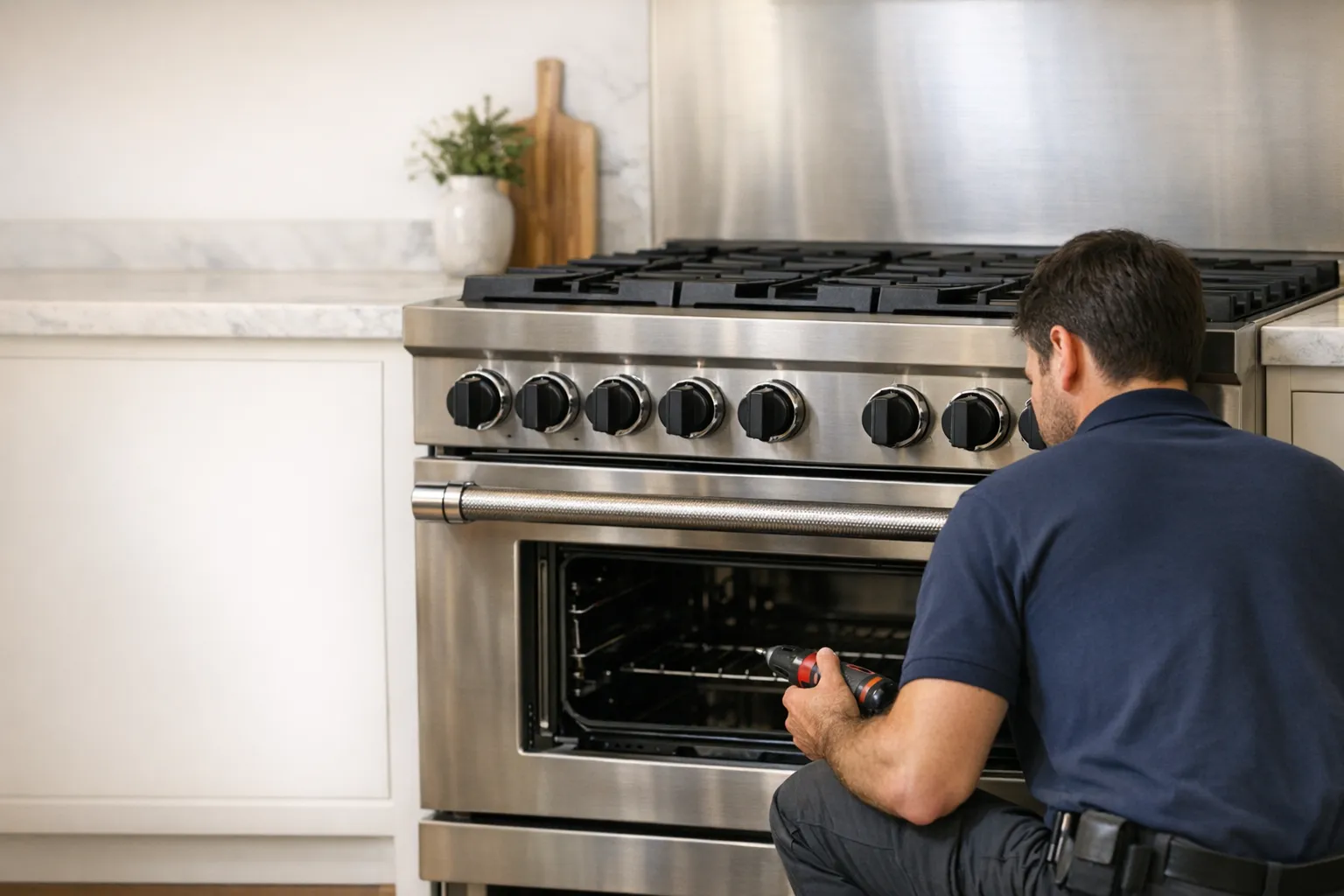
Specialists in KitchenAid
Why LA Trusts Us With KitchenAid
KitchenAid brings commercial styling into the LA home kitchen, from PrintShield satin stainless French door refrigerators to those unmistakable 36- and 48-inch commercial style gas ranges with continuous cast iron grates. That pro grade build is worth protecting, and a KitchenAid is almost always worth repairing rather than replacing: fridge compressors alone are rated for roughly 10 to 15 years, so most in warranty and mid life units come back to full strength for far less than a new suite. Our certified technicians are KitchenAid specialists, and we carry OEM parts on the truck so a not cooling fridge, a range that clicks but won't light, or a dead after self clean oven gets solved on the first visit whenever we can.
Because KitchenAid is a Whirlpool brand, we know its fault code family cold: the fridge PO, PE and E0/E1 codes on the dispenser display, the F2E1 and F3 codes on ranges, and the F3, F4 and F9 codes on wall ovens all point to specific parts, and we diagnose to the exact one instead of guessing. Repairly is a family owned, licensed and insured LA repair company, and we service the modern KitchenAid kitchen lineup, refrigeration through cooktops, along with the legacy KitchenAid dryers the brand no longer makes. From Santa Monica to Sherman Oaks, homeowners trust us to treat a pro style kitchen with the care it was built for.
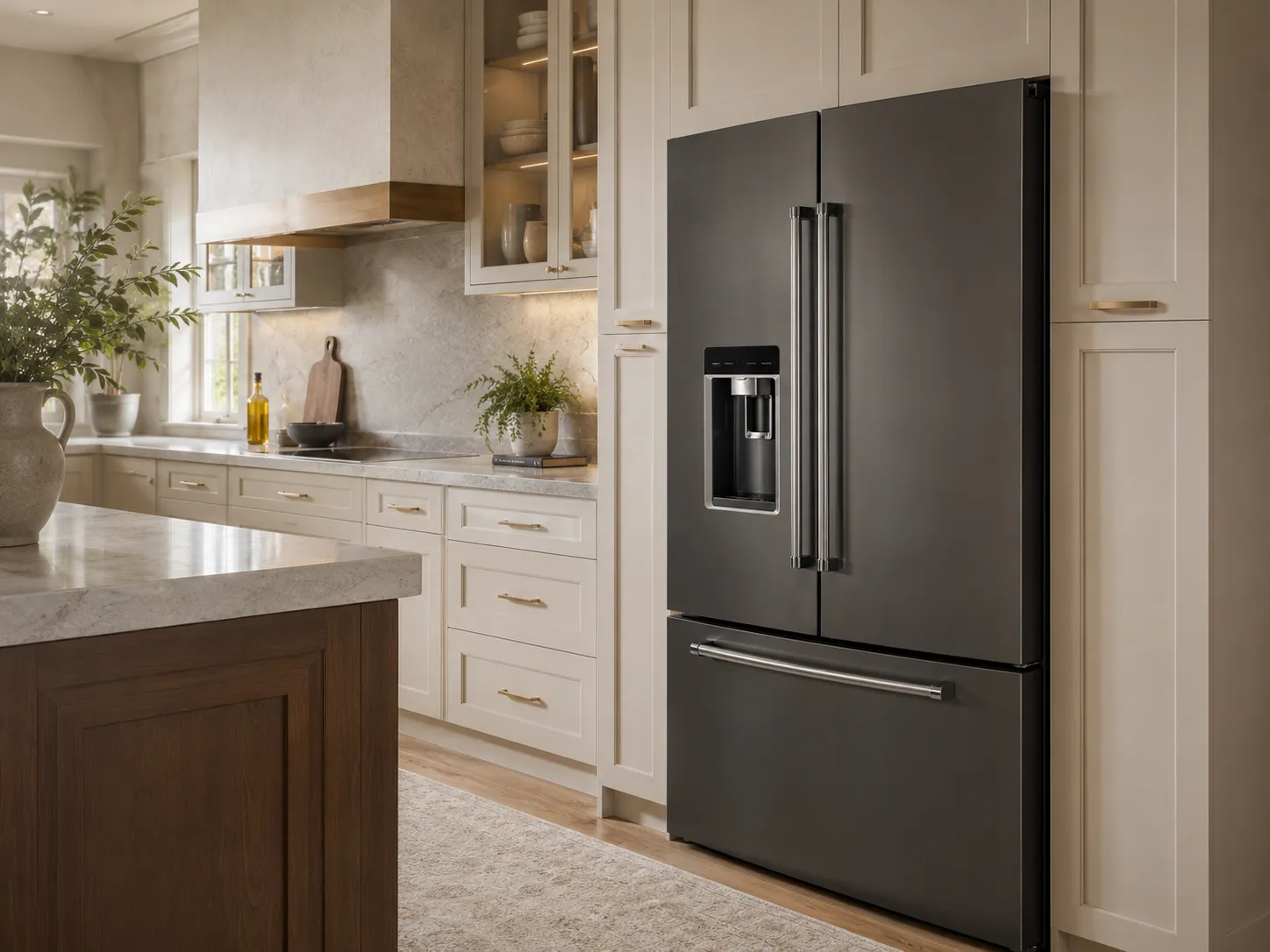
Refrigerators
KitchenAid Refrigerator Repair
The KitchenAid fridge is a flagship category, and it's the call we get most, whether it's a French door, side by side, bottom freezer or built in model. A warm fridge is usually a sealed system problem or a failed fan, and we're licensed for the compressor and refrigerant work most shops send away. Because compressors are rated for roughly 10 to 15 years, a mid life KitchenAid fridge is almost always worth repairing rather than replacing.
-
Not cooling or warm fridge
Loss of cooling usually traces to a weak or failed compressor, a sealed system refrigerant leak, dirty condenser coils, a bad condenser or evaporator fan, or a failed thermistor (often shown as an E0 or E1 code). Sealed system repair is a licensed job, and our certified techs are equipped to do it.
-
Ice maker not making ice
One of the most frequent KitchenAid service calls. The cause is often a clogged or overdue water filter, a faulty water inlet valve, a restricted supply line, a freezer running above the ideal 0 to 5F range, or a failed ice maker module on either an in door or second ice maker.
-
Leaking water or frost buildup
Interior leaks and dispenser faults come from a frozen water line, a failed dispenser valve, or a cracked door gasket that lets warm humid air into the ice compartment on French door models. A worn door seal is a common, inexpensive fix we replace with OEM parts.
-
PO, PE and error code faults
The dispenser display shows real fault codes: PO means a recent power outage, PE is a programming error often after a surge, and E0 or E1 point to a faulty temperature sensor. Some clear with a power cycle; persistent codes point to the main control board, which we diagnose and replace.
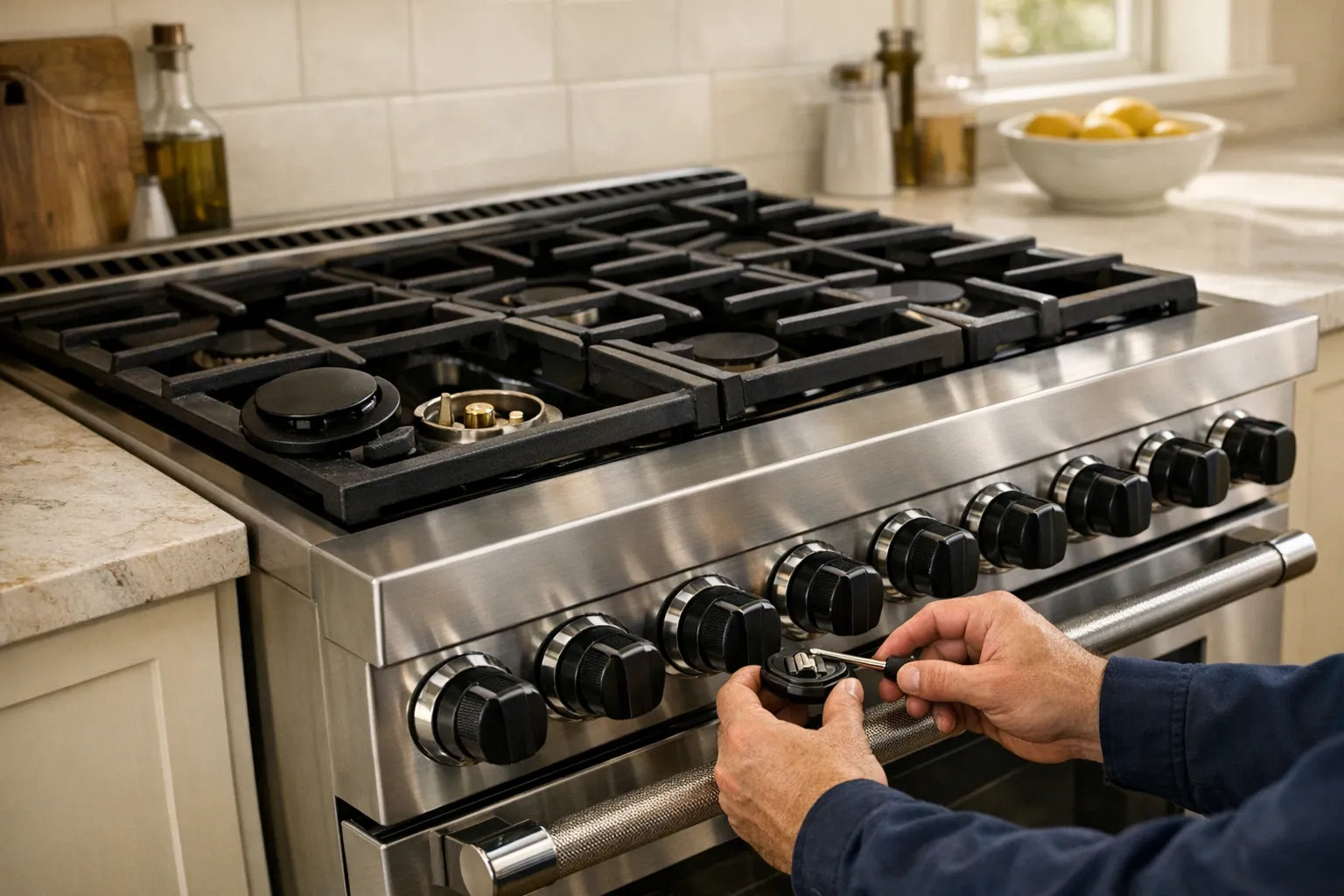
Ranges
KitchenAid Range Repair
The commercial style range is the most recognizable KitchenAid piece, and we service the whole family in gas, dual fuel and electric across 30-, 36- and 48-inch widths. Because a range is a cooktop and an oven in one body, it inherits both burner ignition and oven sensor failures, so we test the exact circuit rather than swapping parts. Our certified technicians know the KitchenAid F code family and carry OEM igniters, sensors and control boards.
-
Burner clicks but won't light
A surface burner that clicks without lighting usually has a worn spark electrode, a burner cap that isn't seated flush, clogged burner ports, moisture in the switch after cleaning, or an engaged control lockout. We clean the ports properly and replace a weak electrode that can't throw a strong enough spark.
-
F2E1 flame failure or high temp
On gas ranges the F2E1 code signals a flame failure during ignition; on electric models it can mean a shorted touchpad cable. We check the oven igniter for cracks, clean the flame sensor, and verify the F2 high temp reading isn't a welded bake or broil relay that needs a new control board.
-
Oven won't heat or reach temp
A gas oven that won't heat usually has a weak bake igniter that no longer opens the gas valve; an electric range points to a broken element or failed relay. An F3 code means an open oven temperature sensor (RTD) needing replacement, and F1 points to a control board failure.
-
Stuck door after self clean
The extreme heat of a self clean cycle can trip a thermal fuse or damage the door lock motor, leaving the door locked or the oven dead afterward. Some models throw a 'close oven door' message even when it's shut, tied to the door switch or lock assembly. This is a common post holiday repair for us.
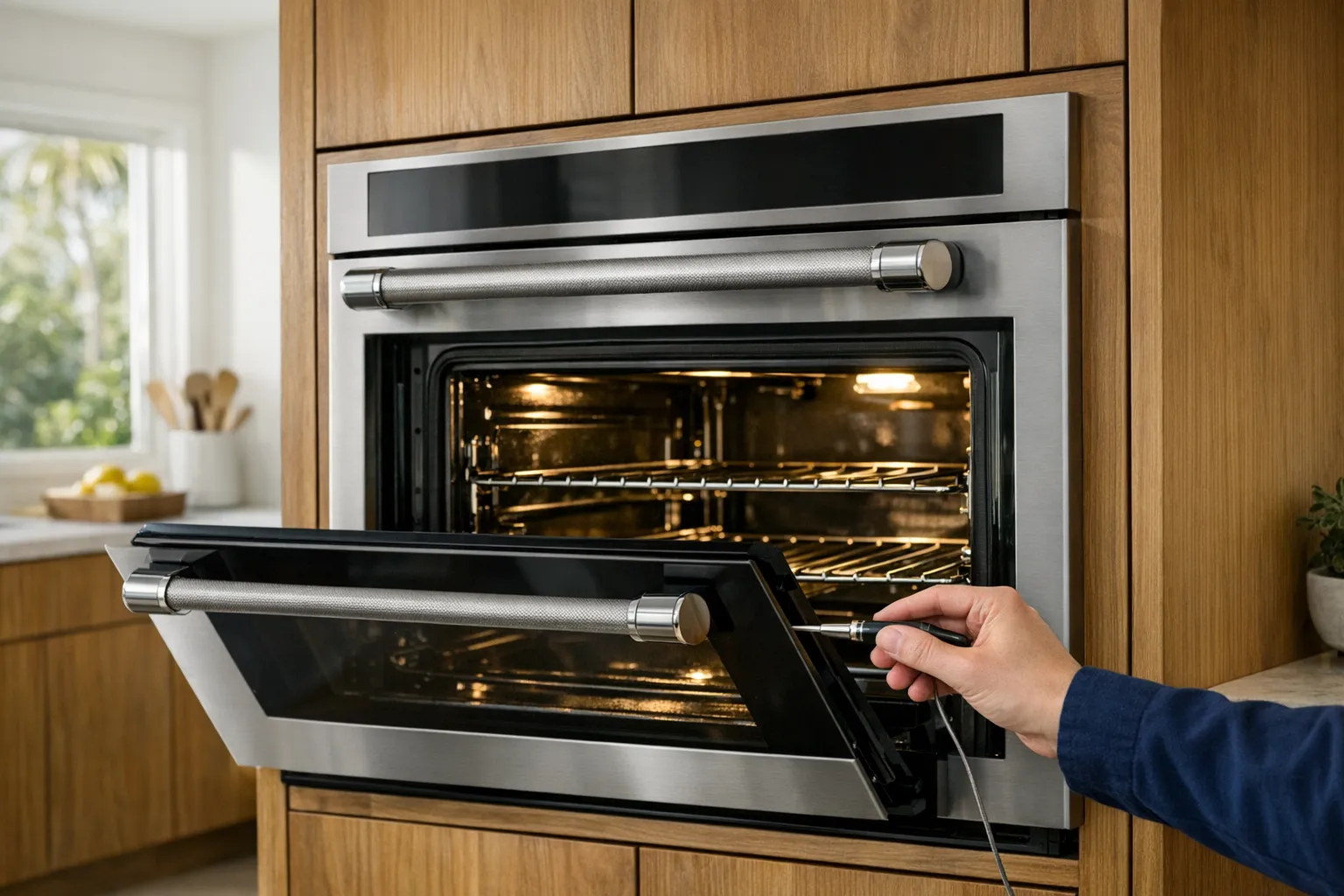
Ovens
KitchenAid Oven Repair
KitchenAid single and double electric wall ovens, most often the 30-inch, feature EvenHeat convection, a meat probe and self clean, and they share the F code family with the ranges. Uneven baking and temperature sensor faults are the bread and butter of what we fix. Our certified techs read the fault code to the exact part and install OEM elements, sensors and boards so your oven holds temperature again.
-
Not heating or uneven baking
A wall oven that won't reach temperature usually has a failed bake or broil element, a bad control board relay, or a drifting temperature sensor causing under- or over baking. Foil on the oven bottom and blocked racks also disrupt airflow and even heating, which we check as part of the diagnosis.
-
F3 and F4 sensor (RTD) codes
All F3-E codes indicate an open or defective oven temperature sensor (RTD) that should be replaced, while F4 indicates a shorted RTD. The board reads the sensor's resistance rather than actual heat, so a bad sensor causes unsafe temperature swings or a mid cycle shutdown until it's replaced.
-
F1 board and F9 lock faults
F1 signals an electronic control board (clock) failure that usually needs a board replacement, and F9 or F9E0 points to a door lock or latch fault. Some errors clear by cycling the breaker for a minute; recurring codes tell us the board or the lock motor is the real problem.
-
Meat probe F4 fault
An F4-E1 code indicates a meat probe circuit defect, which owners see when the probe jack or wiring shorts. The oven may refuse to start a probe based cook until the probe or its receptacle is replaced, a straightforward fix we do with OEM parts.
Cooktops
KitchenAid Cooktop Repair
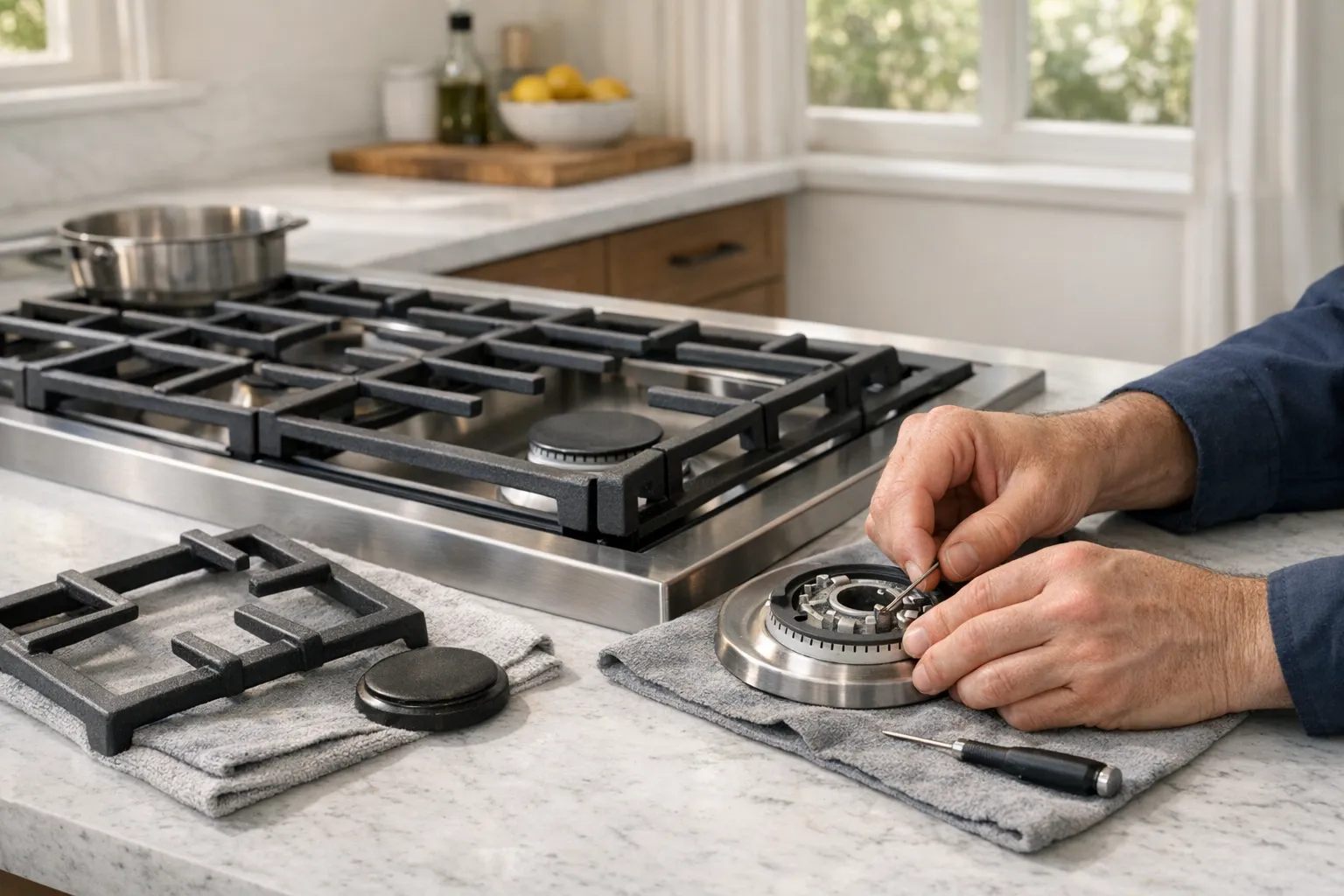
KitchenAid makes gas, electric radiant ceramic glass and induction cooktops, plus 36- and 48-inch commercial style rangetops, and each has its own signature failures. Gas ignition faults and glass or element problems dominate the calls we get. Our certified technicians run the right test first, from the magnet test on induction to an infinite switch check on radiant tops, and carry OEM electrodes, elements and glass tops.
-
Gas burner clicks but won't light
The most common gas cooktop complaint. It's usually a worn spark electrode, a burner cap not seated flush, clogged ports, moisture in the igniter switch after a spill, or an engaged control lockout. One wet switch can make every burner click continuously until it dries or the switch is replaced.
-
Induction won't heat or recognize pan
An induction burner that won't heat is often just cookware: only ferromagnetic pans that a magnet sticks to will work. Beyond that, a failed induction coil, generator board, or overheated electronics can shut a burner down, so we verify with the magnet test before opening anything up.
-
Radiant element won't heat or stuck on
On ceramic glass radiant tops a burner that won't heat or stays full on points to a failed radiant element, a bad infinite (surface) switch, or a failed control board. A burner stuck on high is a safety issue, so we treat those as priority calls.
-
Cracked glass or dead touch controls
A dropped pan, thermal shock, or sliding cast iron can crack a ceramic glass radiant or induction top, which is not safe to use because of the wiring below and needs a full glass top replacement. A dead touch panel or a lockout that won't release means the control board or membrane needs service.
Dryers
KitchenAid Dryer Repair
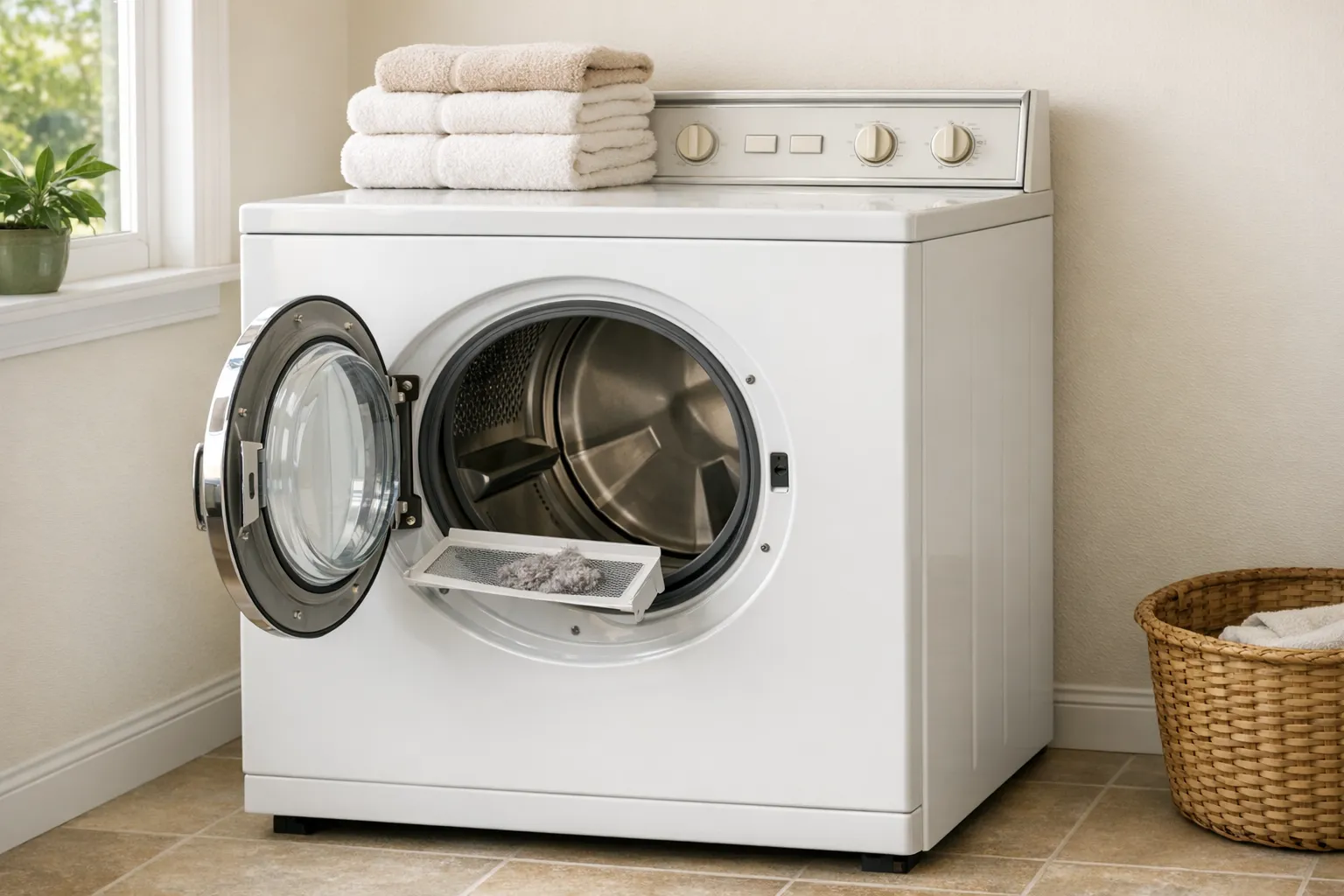
KitchenAid no longer makes laundry appliances, but we still service the older KitchenAid dryers, from the full size legacy models to the premium built in ProLine units. Parts for the KEHS01-era dryers are still widely available, so a no heat or noisy legacy dryer is very much worth repairing. Our technicians confirm every diagnosis with a proper continuity test rather than guessing at a decades old machine.
-
No heat or not enough heat
By far the most documented complaint on legacy KitchenAid dryers like the KEHS01 series. The cause is a blown thermal fuse (often from restricted venting), an open thermal cut off fuse, or a broken heating element, which we confirm with a multimeter continuity test before replacing.
-
Long dry times or poor airflow
A dryer that runs but takes too long usually has a lint blockage restricting airflow in the vent, lint screen housing or exhaust duct. Restricted venting also repeatedly blows the thermal fuse, so we clear the vent as part of a proper repair, not just swap the fuse.
-
Won't start or won't tumble
A unit that won't start or spin points to a worn drive belt, a failed door switch, a bad start switch, or a seized idler or drum roller. Belt and roller wear are common on decades old units, and the parts are still available so we can bring it back to service.
-
Noisy or squealing drum
Grinding, thumping or squealing on legacy sets comes from worn drum support rollers, a failed idler pulley, or worn bearings (the original ProLine era dryers used bronze roller bearings). The standard fix is replacing the rollers, belt and idler together so the noise doesn't return.
KitchenAid Lines We Service
-
Refrigeration
French door, side by side, bottom freezer, built in and counter depth models in PrintShield satin stainless or black stainless.
-
Commercial Style Ranges
Freestanding and slide in gas, dual fuel and electric ranges with a pro look, heavy cast iron grates and die cast metal knobs.
-
Wall Ovens
Single and double electric wall ovens with EvenHeat convection, meat probe and self clean, often paired with a separate cooktop.
-
Cooktops & Rangetops
Gas, electric radiant and induction cooktops, plus 36- and 48-inch commercial style gas rangetops.
-
Ice Makers
In door and second drawer ice systems, serviced as part of the refrigeration work we handle every week.
-
ProLine Dryers (legacy)
The premium ProLine built in dryer and other legacy KitchenAid dryers; KitchenAid no longer sells laundry, but we still service these dryers.
KitchenAid Repair Questions
Is my KitchenAid refrigerator worth repairing or should I replace it?
Usually repairing. Compressors are rated for around 10 to 15 years, so most in warranty and mid life units are well worth fixing, and repairing a pro style KitchenAid is almost always far cheaper than replacing the whole suite. We'll give you an honest assessment before any work, and if it's genuinely not worth it we'll tell you.
Do you handle KitchenAid compressor and sealed system repairs?
Yes. A warm fridge often comes down to a failed compressor or a sealed system refrigerant leak, and that is a licensed job requiring specialized tools, which is exactly why many shops send it away. Our certified, licensed and insured technicians are equipped to diagnose and complete sealed system work with OEM parts.
What do KitchenAid error codes like PO, PE, F2E1 and F3 mean?
On the fridge, PO means a recent power outage and PE is a programming error, and both can sometimes be cleared with a power cycle, while E0 or E1 point to a temperature sensor. On ranges and ovens, F2E1 is a flame failure, F3 is an open temperature sensor (RTD), and F1 is a control board fault. If a code keeps returning after a power cycle, it points to a specific part and it's time to call us.
My KitchenAid oven died after a self clean cycle. Can it be fixed?
Yes, and it's a very common call for us, especially after the holidays. The extreme heat of a self clean cycle can blow a thermal fuse, cook the control board, or seize the door lock, leaving the oven dead or the door stuck. Each of those is a repairable fault, and we carry the OEM fuses, boards and lock motors to fix it, often in one visit.
Do you still service older KitchenAid dryers even though KitchenAid no longer makes laundry?
Yes. KitchenAid no longer makes laundry appliances, but we still service the older KitchenAid dryers, including the KEHS01-era models and the premium ProLine built ins. Parts for these are still widely available, so a no heat, noisy or won't start legacy dryer is genuinely worth repairing.
KitchenAid Repair Across Los Angeles
We come to you, KitchenAid appliance repair throughout Los Angeles and the surrounding communities, backed by a 1 year parts & labor warranty.
Repairly is an independent, family owned repair company. We are not affiliated with, authorized by, or endorsed by KitchenAid; the KitchenAid name is used only to identify the appliances we service.
Ready to book?
Book Your KitchenAid Repair Today
KitchenAid appliance repair across Los Angeles, certified technicians, OEM parts, and a 1 year parts & labor warranty.
$79 diagnostic, waived when you proceed. The Repairly Warranty: 1 year parts & labor, in writing. Licensed & insured.